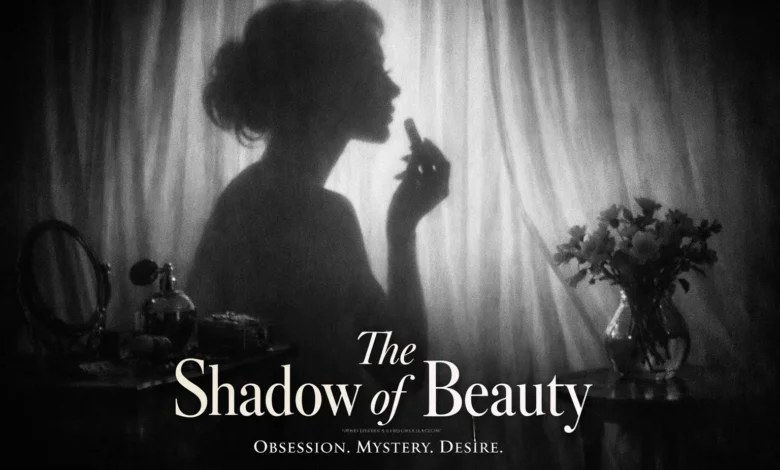
Shadow of Beauty Lena had always been beautiful. Not in the subtle way that reveals itself slowly, but in the immediate, arresting way that made strangers stop mid-sentence and forget what they were saying. By the time she was sixteen, she had learned to navigate the world through the filter of her face—the way doors opened without her having to knock, the way professors extended deadlines, the way her mother’s friends would touch her cheek and sigh as if mourning their own lost youth.
She thought she understood the power she held. She didn’t yet understand its cost.


The modeling contract came when she was eighteen, plucking her from her small college in Vermont and dropping her into the chrome-and-glass world of New York Fashion Week. Her face appeared on billboards in Times Square, forty feet high, her eyes gazing down at the crowds with an expression the photographer had called “enigmatic” but which was really just exhaustion. She became a fixture at parties in penthouses where the champagne cost more than her mother’s monthly rent, where people spoke to her collarbone instead of her eyes.
“You’re so lucky,” her roommate Maya said one night, scrolling through Lena’s Instagram feed, which had swelled to three million followers. “You don’t even have to try.”
Lena smiled, because that’s what people expected. But she wanted to say: You don’t know what it’s like to be seen and yet invisible at the same time.
The men were the worst, though not always in the ways one might expect. Some were aggressive, entitled, treating her beauty as if it were a gift meant specifically for them. But others were different—they became nervous around her, stammering and self-deprecating, as if her face had robbed them of their own worth. They projected their fantasies onto her, turned her into a symbol rather than a person. She became their muse, their dream, their salvation, their trophy. But never just Lena.
The women were more complicated. Some befriended her eagerly, as if proximity to beauty might somehow transfer to them like a contagion. Others treated her with cool suspicion, already resenting her for advantages she’d never asked for. Her closest friend from high school, Sarah, stopped returning her calls after Lena appeared in a Super Bowl commercial. When Lena finally reached her, Sarah’s voice was tight.
“You don’t need me anymore,” Sarah said. “You have everything.”
“I don’t have you,” Lena replied, but the line had already gone dead.
At twenty-three, Lena met Daniel at a fundraiser for ocean conservation. He was a marine biologist, bearded and distracted, who seemed genuinely unaware of her fame. They talked for two hours about coral reefs and the secret language of whales, and when he asked for her number, it was with the hesitant earnestness of someone who assumed he might be rejected.
She fell in love with his normalcy, with the way he looked at her and seemed to see past the surface. For six months, they were happy. He cooked elaborate dinners in his cramped apartment, read her poetry by Neruda, took her to aquariums after hours where they watched jellyfish pulse like ghosts in the dark water. She let herself believe that she had found someone who loved her for who she was, not what she looked like.
Then came the night she overheard him talking to his brother on the phone.
“I know, I know,” Daniel was saying, his voice carrying through the thin bathroom door. “I never thought I’d end up with someone like her. It’s insane. Everyone stares when we go out. The guys at the lab can’t believe it.”
There was a pause, then laughter.
“My league? Are you kidding? She’s so far out of my league we’re not even playing the same sport.”
Lena stood frozen in the hallway, her heart turning to lead. She had wanted to be more than her appearance to him. But she was just a different kind of trophy—the proof that even an awkward marine biologist could land a supermodel. She had been cast, once again, in someone else’s story.
She broke up with him the next day. He cried and didn’t understand, and she couldn’t explain it in a way that wouldn’t sound cruel.
The agency started pushing her to do more extreme shoots. A perfume ad where she wore nothing but strategically placed shadows. A lingerie campaign that made her look like a broken doll, all sharp angles and empty eyes. Her face stared back at her from magazines in grocery store checkout lines, and she no longer recognized the person in those images. That woman was a ghost, a hologram, a beautiful phantom that existed only in two dimensions.
“This is just the beginning,” her agent Marcus said, gesturing expansively at the latest billboard. “You could do movies. You could build an empire.”
But Lena felt herself shrinking. She had become a walking metaphor, a symbol of desire and aspiration that existed for everyone else’s consumption. She was a mirror in which people saw only their own yearning reflected back. The more visible she became, the more she disappeared.
She started wearing baggy clothes and baseball caps when she went out, trying to hide. But beauty like hers was hard to disguise. It leaked through in the curve of her jaw, the arch of her eyebrows, the proportions that some algorithm of human attraction found mathematically perfect. People still stared. Some took photos without asking. Once, a woman grabbed her arm in a coffee shop and said, “Thank you for inspiring me,” though Lena had never spoken a word to her.
“Inspiring you to do what?” Lena asked, genuinely confused.
The woman looked surprised by the question. “To be beautiful, of course.”
At twenty-five, Lena began to notice the subtle changes. The texture of her skin under certain lights. The fine lines beginning at the corners of her eyes. She knew these were normal, human, inevitable. But she also knew that her beauty had an expiration date, and she had built nothing underneath it. Or rather, nothing anyone seemed interested in discovering.
She enrolled in community college classes under a fake name, studying philosophy and art history. She volunteered at a women’s shelter, where the residents knew her only as “Lena from Tuesday nights,” someone who served soup and listened to their stories. For the first time in years, she felt the possibility of substance, of becoming more than a surface.
But the modeling world was already moving on. The calls came less frequently. Designers wanted “fresh faces,” which meant younger ones. Her agent suggested subtle procedures—just a little here, a tiny adjustment there. “Maintenance,” he called it, as if she were a building requiring upkeep to prevent collapse.
She said no.
The dissolution of her career should have felt like failure, but instead it felt like liberation. The world’s gaze began to slide past her, seeking newer, younger beauty. For the first time since adolescence, she could walk down a street without turning heads. She felt herself becoming substantial, solid, real.
She moved to Portland and got a job at a nonprofit that taught art to at-risk youth. She rented a small apartment with a garden where she grew tomatoes and herbs. She dated a middle school teacher named Alex who thought she was pretty but who fell in love with her laugh, with the way she listened, with her patience with the difficult kids in the program.
On her thirtieth birthday, she found an old magazine cover of herself in a box she was unpacking. She studied the image—that flawless face, those calculated angles, the expensive emptiness of the whole production. The woman in the photograph was stunning and hollow, a beautiful cage she’d been trapped inside.
She thought about all the years she’d spent being looked at but not seen, desired but not known, envied but not understood. She thought about the friendships lost to jealousy, the loves corrupted by fantasy, the parts of herself that had atrophied in the shadow of her own face.
But she also thought about the girls she worked with now—tough, damaged, brilliant girls who were learning to see themselves as more than their bodies, more than what the world projected onto them. She thought about Maria, sixteen and fierce, who said last week: “Ms. Lena, you really get it. You understand what it’s like when people only see what they want to see.”
She had nodded, not trusting herself to speak.
Beauty, she had learned, cast a shadow. And she had spent the first part of her life in that shadow, mistaking it for substance. But shadows are nothing on their own—they’re just the absence of light, the shape that forms when something solid blocks illumination. The real substance had been there all along, waiting for her to step out from behind her own face.
She taped the magazine cover to her bathroom mirror, not as a shrine to lost youth but as a reminder. That beautiful stranger had been part of her journey, but she was no longer the whole story. Lena had finally become three-dimensional—scarred, complex, human, and free.
The face in the mirror now had lines and textures, evidence of years and laughter and late nights and worry. It was not the face that launched a thousand campaigns. But it was hers, finally and completely hers. And when she looked at it, she recognized the person looking back.
That was the most beautiful thing of all.
Read More: I Was Escorted off my Own Ship