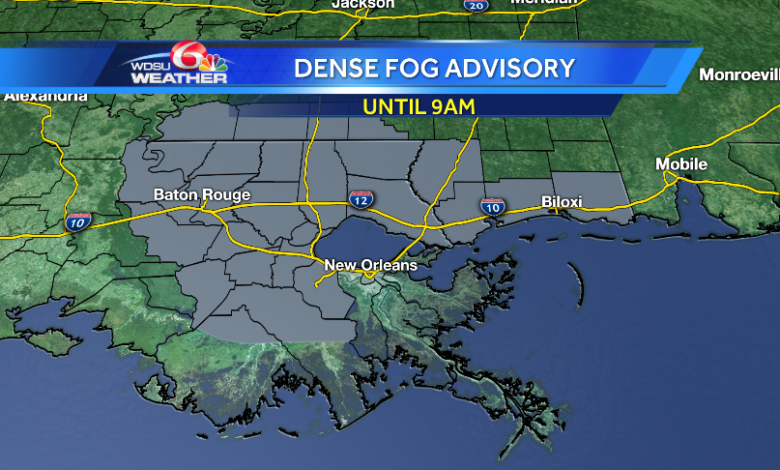
A dense fog advisory is one of those weather alerts that can look harmless on your phone, right up until you’re on the road staring into a gray wall where taillights vanish in seconds. Fog doesn’t roar like a thunderstorm or blow like a hurricane, but it can be just as dangerous because it steals the one thing drivers, pilots, and pedestrians depend on most: visibility.
When a dense fog advisory is issued, it’s a signal that travel conditions may quickly turn risky, especially during early morning commutes, overnight drives, and near-water routes where fog forms fast and lingers. In this guide, you’ll learn exactly what a dense fog advisory means, how it’s different from a fog warning, why it happens, how long it usually lasts, and what to do if you must travel through low-visibility conditions.


Dense Fog Advisory Meaning and Why It Matters
A dense fog advisory is a weather alert issued when fog is expected to significantly reduce visibility over a widespread area, creating hazardous travel conditions. The key idea is not just that fog exists, but that the fog is thick enough to impact safety on roads, bridges, and highways, and sometimes even disrupt aviation and marine travel.
If you’ve ever asked, “What is a fog advisory?” the short answer is this: it’s an early warning that visibility is expected to drop to a level where accidents become more likely. Fog-related crashes often involve chain reactions because drivers can’t see hazards early enough to slow down smoothly. That’s why the phrase low visibility is so closely tied to this alert. In real life, a dense fog advisory can mean sudden slowdowns on interstates, increased rear-end collisions, and dangerous conditions at intersections where visibility changes block by block.
Even if you’re not driving, the advisory matters. Reduced visibility can affect school transportation, emergency response times, flights at regional airports, and shipping or ferry routes. In other words, this is a weather alert that deserves attention, especially if your day includes travel.
When the National Weather Service Issues a Dense Fog Advisory
Many people search for National Weather Service dense fog advisory because they want to know the “rule” behind the alert. While details can vary by region, advisories are generally issued when meteorologists expect widespread fog that brings visibility down to dangerous levels for a sustained period.
A common threshold people see associated with this alert is visibility 1/4 mile or less, especially when that low visibility is expected over a large area and for long enough to create widespread travel hazards. The advisory is designed to prompt action early, not after drivers have already entered the worst conditions.
The timing is also predictable. A dense fog advisory often appears late at night or in the early morning because fog forms most easily when temperatures cool and the air near the ground becomes saturated. That’s why commuters often wake up to the alert, step outside, and realize the neighborhood looks like it’s been erased.
Dense Fog vs Fog Advisory vs Fog Warning
People often confuse the terms fog advisory, fog warning, and dense fog in general forecasts. The differences matter because they hint at severity and expected impact.
Fog forecast vs advisory
A regular fog forecast in a daily weather report means fog is possible or likely, but it may be patchy, brief, or not widespread enough to justify an alert. Fog in a forecast is information. A dense fog advisory is a formal hazard statement that signals a higher risk of disruption and accidents.
Dense fog advisory vs dense fog warning
A fog warning is typically used when the threat is more severe, widespread, and immediate, often with extremely low visibility and a strong expectation of dangerous impacts. In many areas, a dense fog advisory is used more often than a warning, but the goal is the same: to reduce injuries and prevent crashes by getting people to slow down, increase following distance, and avoid unnecessary travel.
Fog vs mist and why it matters
Searches for fog vs mist spike during cool months because people notice the haze but aren’t sure what they’re seeing. Fog is dense enough to significantly cut visibility, while mist is lighter and usually allows drivers to see farther. A dense fog advisory implies you’re dealing with the heavier end of the spectrum, where normal driving habits stop being safe.
What Causes Dense Fog and Why It Forms So Fast
Fog forms when air near the ground becomes saturated and water vapor condenses into tiny droplets that hover close to the surface. That sounds simple, but the atmosphere has multiple ways to reach that saturation point.
Radiation fog and calm nights
One of the most common setups is radiation fog. After sunset, the ground cools, cooling the air near the surface. If winds are light and moisture is present, fog can develop quickly and spread across valleys, neighborhoods, and rural roads. This is why early mornings are a hotspot for a dense fog advisory.
Advection fog near coasts and lakes
Advection fog forms when moist air moves over a cooler surface, such as ocean water, a cold lake, or chilled ground after a cool front. Coastal highways and lakeside routes are especially prone to sudden low visibility, and drivers often notice conditions change within a few miles.
Valley fog and terrain traps
Terrain matters. Valleys collect cool air and moisture, creating fog that can persist even after sunrise. If you live in or travel through hilly regions, you may experience “clear road, then instant fog” as you drop into a low spot. This is a big reason driving in fog can feel unpredictable.
Fog and smoke or pollution
In some areas, haze from smoke or pollution can combine with moisture to create thicker, more persistent visibility issues. People sometimes search fog and air quality after waking up to a gray sky. While a dense fog advisory is about visibility hazards, air quality alerts are a separate category, and it’s worth checking both if you have respiratory concerns.
How Long Does a Dense Fog Advisory Last?
One of the most searched questions is “How long does a dense fog advisory last?” The honest answer is: it depends on the weather setup and how quickly the atmosphere mixes. Fog often begins to thin after sunrise as sunlight warms the surface and the air begins to circulate. On many mornings, the worst conditions occur just before dawn and improve by mid-morning. But some fog events linger into late morning or even afternoon, especially in valleys or under thick cloud cover that blocks warming.
A dense fog advisory may be extended if conditions are slower to improve than expected. It may also be canceled early if visibility rises faster than forecast. The best practice is to check updates from local weather sources before leaving, because fog can evolve quickly, and the timing of improvement is one of the trickiest parts of fog forecasting.
Driving in a Dense Fog Advisory: What Actually Keeps You Safe
If you remember only one thing from this guide, make it this: during a dense fog advisory, visibility can drop suddenly and dramatically, so driving must change with it. Many crashes happen because people keep “normal speed” while their stopping distance becomes totally mismatched with what they can see.
Speed and spacing are your real safety tools
Safe fog driving is about giving yourself time. Lower speed and longer following distance are not optional when low visibility hits. Fog can hide stopped traffic, sharp curves, and animals crossing rural roads. The safest drivers are the ones who treat fog like a moving construction zone: slow, steady, and fully attentive.
Headlights, high beams, and the glare problem
People frequently search “Should I use high beams in fog?” In dense fog, high beams can reflect off the droplets and create a bright white glare that makes it harder to see. Low beams are generally the better choice because they reduce backscatter and help illuminate the road surface immediately in front of you. Fog lights, if your vehicle has them, can help by casting a low, wide beam.
Why sudden stops cause multi-car pileups
Pileups in fog happen when one vehicle brakes hard and the cars behind can’t see the hazard in time. If you need to slow down, do it gradually. If you must stop, try to move off the travel lane when safe and keep hazard lights on if conditions require it. This is one reason a dense fog advisory is not just a “drive carefully” message. It’s an “avoid chain-reaction risk” message.
The hidden winter combo: black ice and fog
In cold conditions, fog can coincide with freezing temperatures. People often search black ice and fog because the combination is brutal: you can’t see far, and the road may be slick even if it looks wet. Bridges and overpasses freeze first, and fog can hide the shine that hints at ice. If temperatures are near freezing during a dense fog advisory, treat the road as potentially icy.
Travel Disruptions During a Dense Fog Advisory
Fog impacts more than drivers. It can affect your entire day’s schedule even if you’re not behind the wheel.
Flight delays and airport operations
Searches for flight delays often spike during heavy fog mornings. Airports rely on visibility and instrument landing systems. Some airports can operate in very low visibility, but delays still happen due to spacing requirements between aircraft and safety protocols on the ground.
School delays and bus routes
Parents often look up school delays when fog is widespread. School districts consider visibility, road safety, and bus route risk—especially on rural roads where fog is thickest. Even if school remains open, bus pickup timing may shift.
Marine and ferry impacts
Coastal areas and large lakes can experience fog that limits boat navigation. If your commute includes a ferry or you work on the water, a dense fog advisory can be a major operational factor.
How to Track a Dense Fog Advisory and Get Reliable Updates
In a fog event, the most useful information isn’t just “fog is expected.” It’s where the worst visibility is right now and when it will improve. That’s why people rely on local updates and official sources.
A National Weather Service dense fog advisory will often be paired with local statements describing which counties, corridors, or metro areas are most affected. Many weather apps also show visibility estimates, but visibility can change block to block, so treat app values as guidance rather than certainty. If you’re planning travel, check conditions shortly before leaving. Fog can be patchy at first and then rapidly become widespread, especially near sunrise when temperature and moisture profiles are changing.
Common Questions About Dense Fog Advisory
What does a dense fog advisory mean for my commute?
It means your trip may take longer and carry higher crash risk due to reduced visibility. If you can delay travel until visibility improves, that’s often the safest option. If you must drive, slow down and increase spacing immediately, even if other drivers don’t.
Is a dense fog advisory dangerous?
It can be. Fog is a leading contributor to multi-vehicle crashes because it removes the visual cues drivers use for speed control and hazard detection. The danger rises when drivers overestimate visibility or assume conditions are uniform.
How bad is “dense fog” in real terms?
Dense fog can make it difficult to see more than a few car lengths ahead, and sometimes much less. That’s why phrases like visibility 1/4 mile appear so often in discussions: it’s a level where high-speed travel becomes unsafe fast.
What time does fog usually burn off?
Often after sunrise, but not always. Fog can persist longer in valleys, under cloud cover, or when winds remain calm. A dense fog advisory may continue through mid-morning or longer depending on local conditions.
Practical Ways to Prepare Before Fog Forms
Start by building in extra time on mornings when fog is likely. If you rush, you drive faster, follow closer, and take risks you wouldn’t normally take. Next, make sure your lights work properly and your windshield is clean inside and out, because streaks and grime intensify glare in fog. If your route includes hills, valleys, rivers, lakes, or coastal stretches, assume those areas may be worse than the rest of your drive.
It also helps to know the difference between “patchy fog” and a dense fog advisory. Patchy fog can surprise you in isolated pockets, while an advisory suggests a broader, more sustained visibility issue. If your job allows it, delaying a trip by even an hour can sometimes mean driving in daylight with improving visibility instead of the densest pre-dawn conditions.
Why Fog Safety Is Mostly About Behavior, Not Bravery
Fog creates a weird psychological trap. When you can’t see far, you may feel pressure to “keep up” with traffic, especially on highways. But during a dense fog advisory, the smartest move is to drive for the conditions, not for the ego of the person tailgating you.
Safe fog driving is calm driving. Smooth steering, gentle braking, and patient spacing reduce the chances of sudden chaos. The biggest risks come from abrupt moves: sudden lane changes, hard braking, and speeding into a visibility wall. If you treat fog like a signal to slow your whole system down, you dramatically cut your risk.
This applies to walking, too. Pedestrians and cyclists are harder to see in fog, especially in dark clothing. If you’re outside during a dense fog advisory, assume drivers may not spot you until the last moment. Visibility works both ways.
Conclusion
A dense fog advisory is a serious low-visibility alert, not a minor forecast detail. It means conditions may change quickly, travel may become hazardous, and small mistakes can turn into big consequences. Understanding what the advisory means, how it differs from a fog warning, why fog forms, and how to drive safely can protect you and everyone sharing the road with you.
If you see a dense fog advisory in your area, take it as your cue to slow down, plan extra time, and check official updates before you travel. Share this guide with someone who commutes early, drives long distances, or has new-driver anxiety—because the next dense fog advisory could arrive overnight, and preparation beats panic every time.