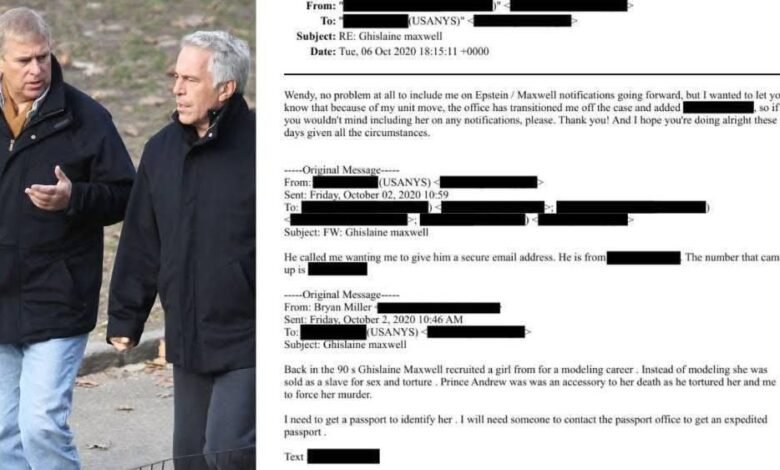
The Prince Andrew Epstein story has never truly gone away, but February 19, 2026, pushed it back to the center of global attention in a dramatic way. After years of controversy tied to Jeffrey Epstein, civil litigation, and reputational damage to the British monarchy, new reporting says UK police arrested Andrew Mountbatten-Windsor (formerly Prince Andrew) on suspicion of misconduct in public office.
The arrest is linked to allegations about his conduct while serving as the UK’s special envoy for international trade, and it arrives alongside renewed media focus driven by newly released U.S. documents related to the broader Epstein files saga. This article breaks down what’s known, what’s alleged, what has been proven in court versus what remains disputed, and why the Prince Andrew Epstein timeline still matters in 2026.


Prince Andrew Epstein — Why This Case Still Dominates Headlines
The continuing public obsession with Prince Andrew Epstein isn’t just about scandal. It’s about power, accountability, and the slow, grinding pace of legal and institutional consequences.
Prince Andrew’s relationship with Jeffrey Epstein became a defining controversy because it collided with public expectations of royal conduct and raised uncomfortable questions about access, privilege, and influence. Over time, the story expanded beyond social ties into serious claims: allegations connected to trafficking networks, public scrutiny of a widely circulated photo with Prince Andrew, and later the legal shockwave of a civil lawsuit that ended in an out-of-court settlement.
In 2026, the story has taken yet another turn: UK authorities arrested Andrew on suspicion of misconduct in public office, according to reporting from major outlets. This development is separate from the earlier civil case, but it’s connected to the same central issue: whether proximity to Epstein was merely poor judgment, or something far more consequential.
The Prince Andrew scandal Timeline From Epstein Connections to 2026 Developments
To understand the present, you need the timeline. The Prince Andrew scandal gained momentum through a series of public events rather than one single disclosure.
The public association with Jeffrey Epstein
Prince Andrew’s association with Jeffrey Epstein became widely discussed after Epstein’s earlier conviction and later arrest, when questions intensified about who remained close to him, who distanced themselves, and who did not. While “who knew what” is often debated, what is clear is that the relationship created reputational damage that only deepened with time.
The civil lawsuit and Virginia Giuffre
A major turning point was the civil case brought by Virginia Giuffre, which alleged sexual abuse when she was a minor and claimed she was trafficked by Epstein and Ghislaine Maxwell. The case moved through significant procedural fights, including attempts to dismiss it, and ended in a settlement announced in February 2022.
Even after settlement, the public conversation did not end. In fact, settlement often raises new questions for audiences: Why settle? What did each side want to avoid? What remains unresolved? Importantly, civil settlement is not the same thing as a criminal conviction, and it does not automatically establish guilt. But it can still shape public perception for years.
The 2026 arrest and the “misconduct in public office” allegation
The newest inflection point is the reported February 19, 2026 arrest. Coverage from the Associated Press and The Guardian describes UK police arresting Andrew on suspicion of misconduct in public office, linked to allegations that he shared sensitive trade information with Epstein during his time as a trade envoy.
This matters because it reframes the conversation. It’s no longer only about reputational judgment or civil allegations. It’s about a policing action tied to official duty and public trust.
What the 2022 Settlement Did and Didn’t Resolve in the Prince Andrew Epstein Narrative
When people search Prince Andrew Epstein settlement, they’re usually trying to answer one simple question: what did it mean?
The settlement announced in February 2022 ended the civil case without trial. Reporting and court-record summaries indicate it included a “substantial donation” tied to Giuffre and a dismissal of the case, while also emphasizing that settlement did not provide criminal immunity.
What it resolved was the lawsuit itself. What it did not resolve were the underlying public debates: who is telling the truth, what evidence exists beyond disputed claims, and whether other forms of legal exposure could ever occur. It also did not resolve the broader Epstein investigation ecosystem, which includes continuing releases of documents and media reporting that frequently re-spotlights prominent names and associations.
The Epstein files and Why Document Releases Keep Reigniting the Story
Search interest spikes whenever there’s a new dump of records or new reporting about the Epstein files. The reason is straightforward: Epstein’s network was social, financial, and political. Document releases can be incomplete, confusing, and easily misinterpreted, but they still drive headlines and public curiosity.
Recent coverage notes a “latest” release of Epstein-related documents and communications that again fueled public scrutiny of high-profile figures, reinforcing how the case remains a live media ecosystem.
A key caution for readers is this: appearing in documents or contact lists does not automatically mean wrongdoing. But repeated proximity, repeated contact, or evidence of facilitation can raise serious questions. That is exactly why the story keeps resurfacing and why audiences keep searching Prince Andrew Epstein with every new release cycle.
Prince Andrew Arrested 2026 — What Reporting Says So Far
In the last 24 hours, one phrase has surged: Prince Andrew arrested 2026. Major outlets report that on February 19, 2026, Andrew Mountbatten-Windsor was arrested in the UK on suspicion of misconduct in public office. Coverage describes the allegation as involving the sharing of sensitive trade information with Jeffrey Epstein during Andrew’s tenure as the UK’s special envoy for international trade.
The reporting also emphasizes the institutional response: public distancing language, a “law must take its course” posture, and the broader royal family reputational stakes. Because this is a developing situation, it’s important to keep the legal basics in mind. An arrest is not a conviction. “Suspicion” is not proof. But an arrest by itself signals that authorities believe there is enough basis to act, investigate, and potentially pursue further legal steps.
How the Monarchy Has Been Pulled Into the Prince Andrew Epstein Fallout
The Prince Andrew Epstein controversy has repeatedly become a monarchy story, not just a personal scandal, because it touches the institution’s credibility. There has also been significant attention on Andrew’s living arrangements and royal property issues. Recent reporting notes that Andrew moved out of Royal Lodge amid renewed scrutiny and new document-driven headlines.
The Role of Ghislaine Maxwell in the Prince Andrew Public Narrative
No serious overview of Prince Andrew Epstein is complete without Ghislaine Maxwell, because Maxwell’s case shaped public assumptions about how Epstein’s network operated. Recent reporting referenced DOJ-released material in which Maxwell disputed aspects of allegations involving Prince Andrew, including claims related to a specific London location and the authenticity of a widely known photograph.
This is a major reason the story stays so contested: different parties say different things, and people interpret those statements through their own assumptions. Maxwell’s statements are not neutral fact, but they are part of the public record and media cycle.
If you’re trying to evaluate claims fairly, separate three categories in your mind: verified court outcomes, officially reported investigations, and disputed narratives promoted by involved parties. The internet often mixes all three into one viral “truth,” which is exactly why confusion persists.
Evidence, Standards of Proof, and Why This Story Is So Hard to “Close”
The Prince Andrew Epstein story has always been difficult to resolve in the public mind because different legal contexts demand different standards of proof. Civil cases, like the Virginia Giuffre lawsuit, operate under different burdens and incentives than criminal cases. Settlements are shaped by risk, privacy, cost, and reputational calculus, not necessarily by a jury’s determination of truth.
Criminal allegations, like the reported 2026 “misconduct in public office” suspicion, follow another route entirely. They focus on whether conduct meets specific statutory or common-law thresholds, and whether investigators can prove key elements beyond a reasonable doubt.
That is why the public can feel whiplash. One month the headlines are about documents. Another month the headlines are about a settlement. Another month the headlines are about a police investigation. The story is not one legal process. It’s multiple processes unfolding across years, jurisdictions, and institutions.
The Trade Envoy Angle — Why “Misconduct in Public Office” Changes the Conversation
The newest reporting matters because it reframes Andrew not just as a public figure with questionable associations, but as someone accused of violating the responsibilities of office. According to reporting, the investigation is tied to claims that Andrew, while serving as Britain’s trade envoy, shared confidential trade information with Epstein.
If proven, this would be a different category of wrongdoing than the public has mostly debated in the past. It also widens the story from personal conduct into state-related trust. That’s why it has immediate implications for public interest, law enforcement urgency, and the monarchy’s crisis management posture. It also explains why the story is being covered not only by royal-watch outlets, but by hard news desks focused on governance, policing, and public integrity.
What Happens Next in the Prince Andrew Epstein Story
Because the reported arrest is new and the investigation is ongoing, the next steps depend on law enforcement decisions and prosecutorial thresholds.
Media reporting indicates Andrew remains in custody and that police activity includes searches tied to the inquiry. If authorities believe evidence supports escalation, possibilities include further questioning, release pending further investigation, or eventual charging decisions. It is too early to responsibly claim an outcome, but it is not too early to understand the stakes.
At the same time, the document-release ecosystem related to the Epstein files is still active in public attention, meaning the reputational impact can grow even without courtroom outcomes. For the monarchy, the pressure is equally direct: reputational containment, clear separation of institution from individual, and renewed public debate about accountability when titles and privilege are involved.
Conclusion
The Prince Andrew Epstein story continues to evolve because it sits at the intersection of law, power, and public trust. The 2022 civil settlement closed one courtroom chapter, but it didn’t erase public scrutiny. Now, the reported February 19, 2026 arrest on suspicion of misconduct in public office has opened a new chapter with different legal questions and potentially serious consequences.
If you want to stay informed without getting pulled into rumor cycles, follow credible updates closely and compare headlines against confirmed reporting. And if you found this breakdown helpful, share it or bookmark it so you can revisit the full Prince Andrew Epstein timeline as new official details emerge.